



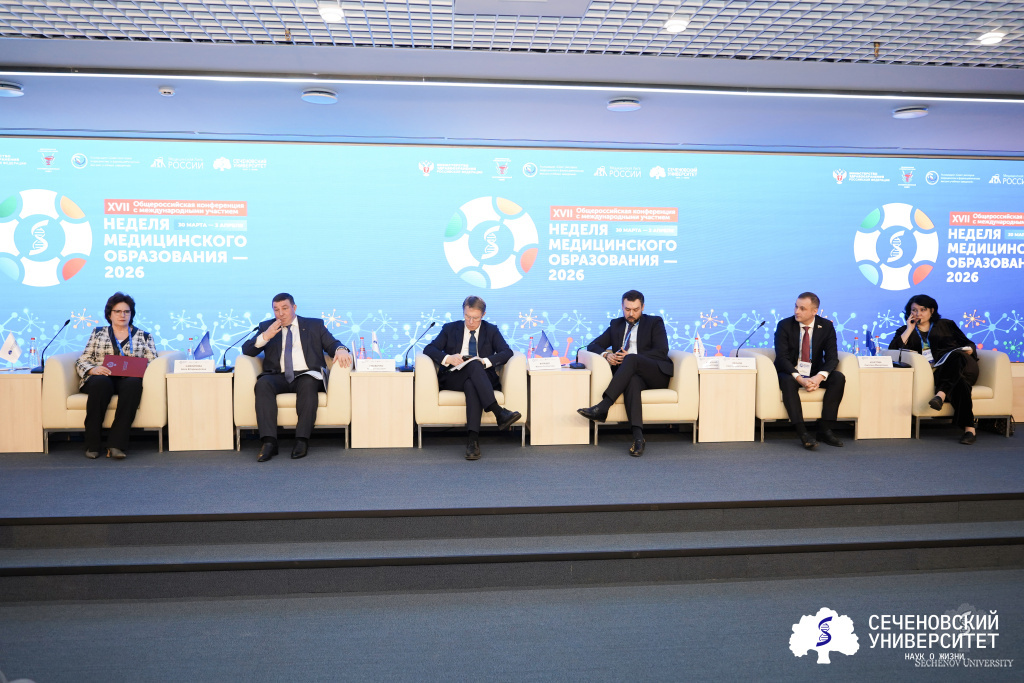
As part of the 17th International Conference “Medical Education Week – 2026”, Sechenov University continues to operate its unique Engineering Development Center (EDC). This is the first and only facility in Russia dedicated to re-engineering and creating new polymer-based medical devices using digital intelligent technologies.
The Center is located in the University’s Biomedical Science and Technology Park. It offers comprehensive services for launching products into serial production – from developing design documentation to detailed description of technological processes and selection of industrial equipment. The Center’s products will be used in maxillofacial surgery, pediatric neurosurgery, prosthetics, obstetrics and gynecology, urology, otorhinolaryngology, and many other fields.
The Center’s production facilities are housed in clean rooms that meet strict quality and safety standards for medical products. EDC engineers have already developed over 420 sets of design documentation, and the Center’s project portfolio includes about 20 promising products ready for prototyping. These include an upgraded biopsy port, trocars, a spinal cage, a dermatoscope, and a mechanical ventilator.
“Medical universities today possess a unique combination of expertise,” experts note. “They train highly qualified doctors and have strong scientific potential. Sechenov University combines clinical training with engineering disciplines, including materials science. Therefore, an interdisciplinary approach is becoming logical – building competencies that lead from development to mass production. The industry needs this, and this direction is being actively supported.”
“Our engineering center will manufacture new medical devices, instruments, and consumables. But for us as a university, it is very important that it will also serve as a training base for medical engineers and medical technicians, who are now needed by practically all healthcare institutions,” said Petr Glybochko, Rector of Sechenov University. “Thus, we are fulfilling both an educational mission and the strategic goal of achieving technological sovereignty and leadership for our country. We are growing, we feel support, and we understand that the future lies in this synthesis of science, engineering, and medicine.”
The 17th International Conference “Medical Education Week – 2026” has brought together over 3,500 participants from Russia and abroad. The program included more than 45 events and 758 expert presentations focused on training personnel according to new quality standards, trends in higher medical education, and digitalization of education.
As part of the 17th International Conference “Medical Education Week – 2026”, Sechenov University continues to operate its unique Engineering Development Center (EDC). This is the first and only facility in Russia dedicated to re-engineering and creating new polymer-based medical devices using digital intelligent technologies.
The Center is located in the University’s Biomedical Science and Technology Park. It offers comprehensive services for launching products into serial production – from developing design documentation to detailed description of technological processes and selection of industrial equipment. The Center’s products will be used in maxillofacial surgery, pediatric neurosurgery, prosthetics, obstetrics and gynecology, urology, otorhinolaryngology, and many other fields.
The Center’s production facilities are housed in clean rooms that meet strict quality and safety standards for medical products. EDC engineers have already developed over 420 sets of design documentation, and the Center’s project portfolio includes about 20 promising products ready for prototyping. These include an upgraded biopsy port, trocars, a spinal cage, a dermatoscope, and a mechanical ventilator.
“Medical universities today possess a unique combination of expertise,” experts note. “They train highly qualified doctors and have strong scientific potential. Sechenov University combines clinical training with engineering disciplines, including materials science. Therefore, an interdisciplinary approach is becoming logical – building competencies that lead from development to mass production. The industry needs this, and this direction is being actively supported.”
“Our engineering center will manufacture new medical devices, instruments, and consumables. But for us as a university, it is very important that it will also serve as a training base for medical engineers and medical technicians, who are now needed by practically all healthcare institutions,” said Petr Glybochko, Rector of Sechenov University. “Thus, we are fulfilling both an educational mission and the strategic goal of achieving technological sovereignty and leadership for our country. We are growing, we feel support, and we understand that the future lies in this synthesis of science, engineering, and medicine.”
The 17th International Conference “Medical Education Week – 2026” has brought together over 3,500 participants from Russia and abroad. The program included more than 45 events and 758 expert presentations focused on training personnel according to new quality standards, trends in higher medical education, and digitalization of education.