Technology transfer and rare disease treatment: clinicians discuss medical advances with Chinese colleagues
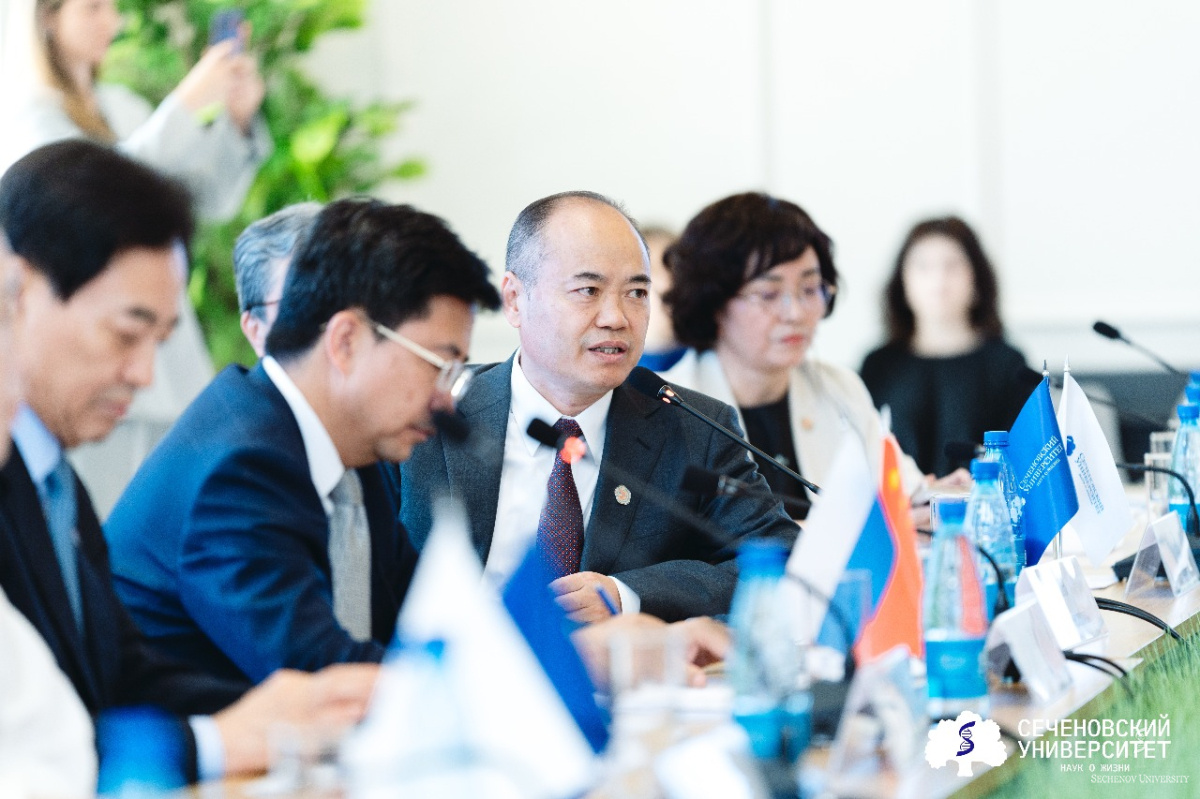
The Sino-Russian roundtable was held at Sechenov University. Representatives from the National Medical Chamber Union, the Chinese Medical Association, and Sechenov University discussed new approaches to diagnosing and treating oncological and orphan diseases, innovative methods in transplantology, and the translation of new technologies.
Opening the roundtable, Leonid Roshal, President of the National Medical Chamber Union, emphasized the importance of cooperation between the two largest medical associations of the two countries – the Chinese Medical Association and Russia's National Medical Chamber.
According to Academician Zhao Yupeng, President of the Chinese Medical Association which is over a hundred years old and has more than 70,000 staff members, has long been cooperating with Russia, inviting foreign delegations, and conducting international exchanges.
Academician Zhao Yupeng thanked Sechenov University for hosting the event, noting that the university is known worldwide. "Today's meeting will bear fruit and allow us to discuss various areas of medicine," said Zhao Yupeng.
Sino-Russian Association of Medical Universities has also been established, headed on the Russian side by the Rector of Sechenov University, Academician Petr Glybochko. According to him, the Association is actively working on developing approaches in education and joint scientific research. "Today, the roundtable of the two countries' national associations will define the vectors we need to develop in our clinics and universities. These include digitalization, artificial intelligence, and approaches to treating patients with severe oncological and genetic diseases. The meeting will lay the foundation for further joint work and cooperation," noted Petr Glybochko.
Heads of the top medical centers in China spoke about achievements in various fields of medicine. Academician Yang Zhenglin focused on progress in medical genetics, while Academician Xia Qiang discussed innovations in living donor liver transplantation.
Professor Olga Shevchenko of the Department of Transplantology and Artificial Organs at Sechenov University told colleagues that more than 60 transplant centers in Russia perform organ transplantation, and Sechenov University has extensive experience in teaching this discipline.
Associate Professor Artem Monakhov discussed approaches to pediatric liver transplantation with Chinese physicians; the clinicians agreed to exchange experience.
Another topic for discussion was orphan diseases – their diagnosis, accessibility of care, and patient support. Professor Zhang Shuyang explained how the system is organized in China.
Academician Alexander Rumyantsev, Vice President of Russia's National Medical Chamber and State Duma Deputy, spoke about managing patients with orphan diseases in Russia. "In the Russian Federation, medical care for 110 rare diseases in children is provided through a state funding system," he reported. Another important issue is the accessibility of new technologies. For example, children with spinal muscular atrophy have gained access to gene therapy, noted Alexander Rumyantsev.
The roundtable also addressed the translation of medical technologies. Academician Zhou Jian noted progress in this area regarding liver cancer prevention and treatment.
"For Sechenov University, exchanging experience in creating a translational mechanism from idea to clinical practice is crucial. We are extremely interested in cooperation on this vital issue for medicine," said Marina Sekacheva, Director of the Institute of Personalized Oncology at Sechenov University. She noted that the university has its own large clinical base where doctors and scientists develop and implement their own treatment technologies.
Among the participants there was Academician Igor Reshetov, Director of the Institute of Cluster Oncology; Professor Sergei Moiseev, Head of the Department of Internal, Occupational Diseases and Rheumatology; Galina Ramenskaya, Director of the Institute of Pharmacy; Fedor Vetshev, Head of the Department of Faculty Surgery No. 1; Valentin Sharobaro, Head of the Department of Plastic Surgery; and other Sechenov University scientists.